Tenzin Dorji, Doctoral Researcher, EPHE-PSL University in Paris and Charles University in Prague
Did you ever hear about the fascinating oral history behind the group of villages named Sephu? This article presents a few of my reflections on the Sephu villages and their language, which is widely referred to as Lakha in existing documents. It is primarily based on field notes gathered through discussions with elder villagers, as well as observations drawn from relevant documents that I consulted.
My findings indicate that the actual endonym of the language is Myangkha, as it is commonly called by village elders, whereas Lakha and several other terms are exonyms assigned by other Bhutanese and by linguists.
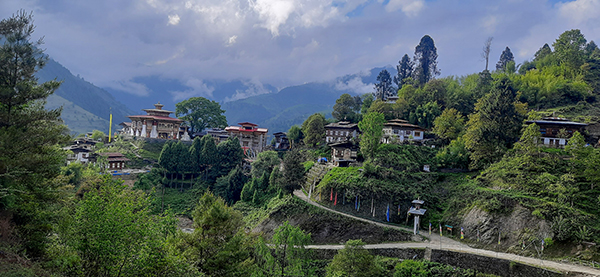
Sephu, written as Sephug (sras phug, སྲས་ཕུག་) in Dzongkha (2023: 2), is located in Sephu gewog (county), which is a part of Wangdue dzongkhag (district) in Bhutan. It consists of ten villages in two chiwogs (village cohort): six villages, viz. Busa, Busa Wangdue Goenpa, Darilok, Zere, Lubzur and Lambji in the Busa and Zere chiwog, and four, viz. Nakha, Sakha Tingte, Rabu and Serthang in the Nakha chiwog. All ten villages together are called Sephu, with a total population of 1,115. They speak Sephukha, which is a generic name for the language commonly used by Bhutanese, but linguists classify it as Lakha (la kha). Sephukha is one of Bhutan’s many unique languages.
In 2007, I was fortunate to be invited by the monastery in Sephu to teach Chokey grammar for a month to the monks there during my summer vacation from college. That was the first time I encountered the name Sephur (sras phur སྲས་ཕུར་), which is considered to be the original version of Sephu, and the history behind it. Although this history was fascinating, my attention was not strong enough at the time to retain it, or even to note it down. After many years, due to my karmic relation to the village and the monastery, fortune favoured me in 2025 when I received a research fieldwork position assisting Professor Camille Simon and her master’s student Berthilde Biard, who came to Bhutan to carry out research on Sephukha.
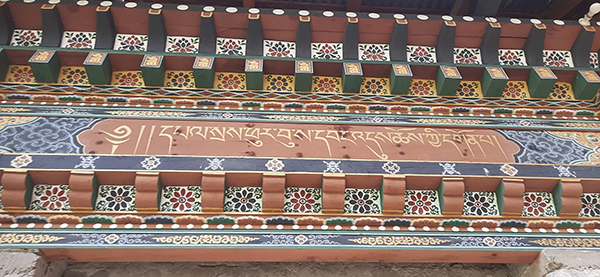
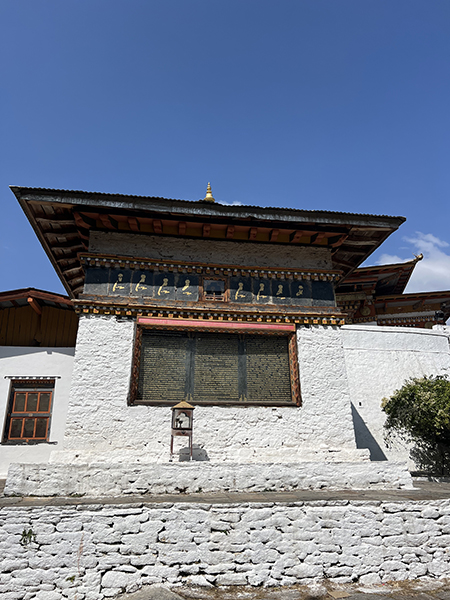
During a break from fieldwork, I visited the monastery to pay homage to the holy relics there. Unlike in prior years, my attention was caught by the board at the entrance addressing the monastery as Pel Sephur Busa Wangdue Choki Goenpa (dpal sras phur bu sa dbang ’dus chos kyi dgon pa). This reminded me of the history behind the name Sephur, which was first recounted to me in 2007. I personally consider this incident an awakening of my latent inclination towards the dharma, particularly in relation to the history of how this monastery came into being.
In search of further information, I approached several village elders to inquire about the monastery’s origins and development. They generously provided me with various insights and resources. During my fieldwork, I received a copy of a book written on the history of the monastery and its successive lineage holders by Lopen Tashi Tenzin (2019: 169-170).
This text mentioned two names: Serphur (gser phur, a golden dagger) and Sephur (sras phur, the heart son’s dagger), both associated with the 14th-century treasure revealer Dorji Lingpa (1346-1405). Regarding the account, it is said that Dorji Lingpa revealed a golden dagger named Namcag Umai Reldi (gnam lcags dbu ma’ ral dri) from Umteng Lake and kept it near the site of the present monastery. The dagger subsequently gave its name to the place, making it known as Serphur.
According to the second account, Sephur is associated with Tshungme Tashi Tenzin, the heart son, who, as prophesied by Dorji Lingpa, used the dagger to conduct the ground blessing ritual ceremony (sa bslang rten ’brel) for the establishment of the monastery. Consequently, the names Sephu in English and Sephug in Dzongkha are said to derive from Sephur, the renowned relic.
I personally consider this a remarkable piece of history, which beautifully intertwines dharmic activity with the origin of place names. At the same time, I wonder what the original name of Sephu may have been before the heart son Tshungme Tashi Tenzin blessed it with the dagger.
I am fascinated to know that different names carry various meanings and features of the language of Sephu. People simply call this language Sephukha, but in documents it is referred to as Tshangke (tshangs skad ཚངས་སྐད་, 1994: 13), Lakha and Tshangkha (la kha and tshangs kha ལ་ཁ། ཚངས་ཁ་, 2001: 866), and Lakhap’ kha (la khap’ kha ལ་ཁ་པའི་ཁ་, 2023: 2).
Although the meaning of Tshangke and Tshangkha wasn’t described in the documents I referred to, several discussions with village elders shed light on the fact that several languages were incorporated within the language of Sephu, including Kurmekha, Bumthangkha, Upper Mangdepa’kha and others. For example: dro is “go”, yong is “come” and hango is “shoes” in the Tibetan spoken language; cilo is “what” and ter is “give” in Kurmekha; ’onge is “children” in Bumthangkha, and buezhi is “children”, zhimbal is “cat”, ’nyil is “mouse” and bek is “thigh” in Mandepa’kha. Thus, the meaning of Myangkha is probably a language with many similar or loan words from many other languages. If this meaning, with examples, is correct, then tshangs skad and tshangs kha should be corrected to tshang skad and tshang kha, simply by erasing the post-suffix.
Clarification of the Lakha or Lakhap’ kha
Van Driem (2001: 866) mentioned Lakha as “language of the mountain passes” and Lakhapa as “speakers of Lakha.” Similarly, Tournadre and Rigzin (2015: 49) and Tshering and van Driem (2019: 2) also mentioned it as Lakha. In contrast, the Dzongkha Dazhung (2023: 2) mentioned it as Lakhap’ kha, meaning the language of Lakhap.
Obviously, there is confusion that needs to be cleared. To my knowledge, la is a hill, lakha is a highland, and lakhap is a highlander in Dzongkha. That is the reason for writing it as Lakhapa’ kha, literally meaning the language of highlanders. It is also attested by the official Dzongkha online dictionary. Although Lakha has become well known among linguists and has been widely disseminated through English articles and books, my personal experience suggests that the more accurate form is Lakhapa’ kha, which describes clearly and aligns with the Dzongkha system.
What is the local name of their language?
As my curiosity led me to discuss more with village elders, I came across a term called Myangkha (myang kha མྱང་ཁ་), which instantly piqued my interest in this new word. So Myangkha is a local name of their language which literally means “our language”.
Likewise, further examples in sentences: nyang kha nang jepa cin. nga dro ni. ngi/myang dro ni, which translates as “In our language, I will go. We will go”. But what strikes me here is that, for everyday conversation, local people use nga for “I”, ngi or ngis for “we”, and myang is also employed alternatively. However, ngikha or ngiskha are never used for their language. This very logic implies that Nyangkha is both the local and original name for the language of Sephu, while the rest are exonyms labeled by other Bhutanese and linguists.
Indeed, there may be some confusion in writing nyang instead of myang, since the two are pronounced almost the same. However, with careful attention, we can easily distinguish them, as the villagers pronounce it with the subjoined ya (མྱ) rather than the single consonant nya (ཉ), which confirms that the correct form is myang (མྱང་).
The speaker population of Myangkha
George van Driem (2001: 866-867) has touched upon the population of Myangkha speakers in some detail, though it seems to me that this inquiry likely needs correction and further research. He listed Saephu, B’uso, ’Langbji, Brabrak, Dzeri, Darilo, ’Wangdigoem, Rabu, Kumbu, Bati, Nakha, Sekta and Thanyae villages as Myangkha (Lakha) speakers. This constitutes some 1,250 households and 8,000 people. However, he missed the village of Tasa, in Dangchu gewog of Wangdue dzongkhag, who speak Myangkha with slight variations according to the information provided to me by the village elders. On top of that, he mistakenly listed Longtoe and Longme villagers in the category of ’Nyenkha (Chutoebi kha) speakers who are from places like Rukhubji. I have been informed that the people of these villages are also speakers of a close variant of Myangkha. So, they should be removed from the list of ’Nyenkha speakers and be included as Myangkha speakers.
If we delve more into variations, even within Sephu villages, some variations between Busa and other villagers can be found. For example, while Busap calls adi and aphi to “this” and “that”, other villages use ’odi and ’ophi for these terms. Likewise, Busap says kho tek shi for the phrase “he went”, whereas in other villages, they say kho tang shi. A detailed grammar and structures will soon be available when Professor Camille Simon and her master’s student Berthilde Biard complete their research work on Myangkha.
Based on these reasons, the speaker population of Myangkha/Lakha provided by van Driem (2001) needs to be verified and reconfirmed with further fieldworks. I, therefore, would like to recommend that the agency concerned to take up the task of updating the related information.
Finally, I extend my warm appreciation to the villagers of Sephu, especially the informants, for their generous time and insightful discussions. I am also grateful to the College of Language and Culture Studies for entrusting me with the fieldwork assignment to assist the researchers. Through this opportunity, I was able to identify the endonym Myangkha, which has not yet been documented by any researchers or linguists, thereby providing new areas for linguistic research.
References
བཀྲ་ཤིས་བསྟན་འཛིན། (༢༠༡༩) གཏེར་ཆེན་ཆོས་ཀྱི་རྒྱལ་པོ་རྡོ་རྗེ་གླིང་པའི་སྐུ་ཕྲེང་རིམ་བྱོན་གྱི་རྣམ་ཐར་དང་། དབང་འདུས་དགོན་པའི་གདན་རབས་དད་ལྡན་ཡིད་ཀྱི་ཀུ་མུད་བཞད་པའི་ཟླ་བ། རྡོར་གླིང་གཞི་ཚོགས།
རྫོང་ཁ་གོང་འཕེལ་ལྷན་ཚོགས། (༢༠༢༣) རྫོང་ཁའི་བརྡ་གཞུང་སྣང་བའི་སྒྲོན་མེ། རྫོང་ཁ་གོང་འཕེལ་ལྷན་ཚོགས།
རྫོང་ཁ་གོང་འཕེལ་ལྷན་ཚོགས། (༡༩༩༤) རྫོང་ཁའི་བརྡ་གཞུང་གསར་པ། རྫོང་ཁ་གོང་འཕེལ་ལྷན་ཚོགས།
Tournadre, N. and Rigzin, K. (2015). Outlines of Chocha-ngacha, an undocumented language of Bhutan related to Dzongkha. Himalayan Linguistics, 14 (2) 49-87.
Tshering, K. and van Driem, G. (2019). The grammar of Dzongkha. Himalayan Linguistics.
van Driem, G. (2001). Languages of the Himalayas: An Ethnolinguistic Handbook of the
Greater Himalayan Region, Containing an Introduction to the Symbiotic Theory of Language (2 vols.) Leiden: Brill.
Informants
Ap Sithup from Zeri
Aum Tsari Zam from Sektang
Pema Zam from Nakha
Lopen Tashi Tenzin from Busa Wangdue Goenpa
Lopen Phurp Tshering from Rukubji
Lopen Rinchen Gyamtsho from Rukubji
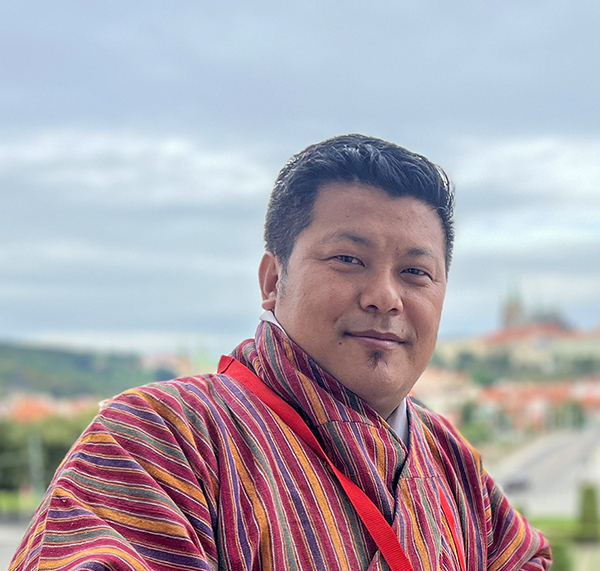
Tenzin Dorji holds an M.A. in Buddhist Philosophy from the Central Institute of Higher Tibetan Studies, Varanasi, India. Since 2014, he has served as a faculty member at the College of Language and Culture Studies (CLCS), Royal University of Bhutan.
He is currently pursuing a joint PhD (cotutelle) between the École Pratique des Hautes Études – PSL (Paris) and Charles University (Prague) as part of the PaganTibet project. He is the author of several monographs and articles on Buddhism, as well as on Tibetan and Bhutanese languages and cultures, written in Tibetan, Dzongkha, and English. His research interests focus on living ritual cultures, oral traditions, and the languages of Bhutan.